
Celotex
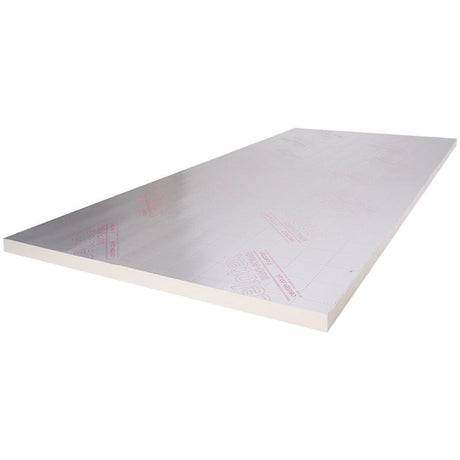
50mm Celotex GA4050 PIR Insulation Board 2.4m x 1.2m - 2.88m2 per sheet
£26.40 Inc VAT £22.00 Ex VATUnit price /UnavailableIn stock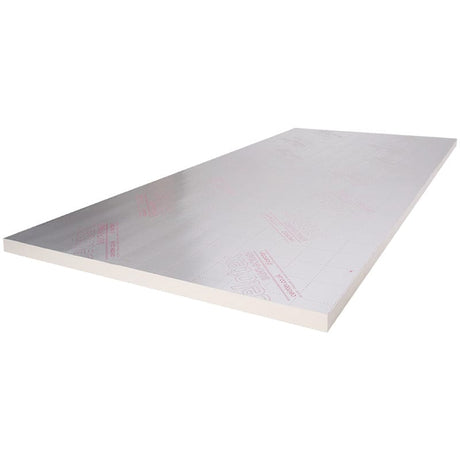
Celotex
60mm Celotex GA4060 PIR Insulation Board 2.4m x 1.2m - 2.88m2 per sheet
£33.43 Inc VAT £27.86 Ex VATUnit price /UnavailableIn stock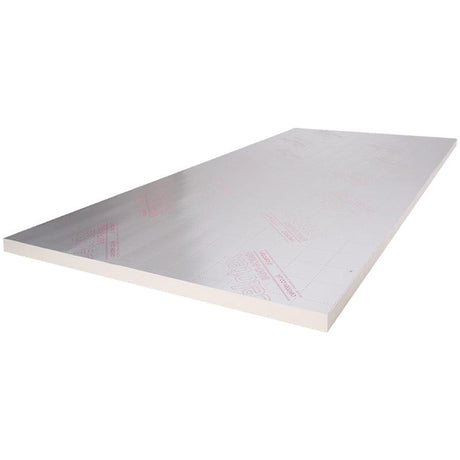
Celotex
70mm Celotex GA4070 PIR Insulation Board 2.4m x 1.2m - 2.88m2 per sheet
£37.20 Inc VAT £31.00 Ex VATUnit price /UnavailableIn stock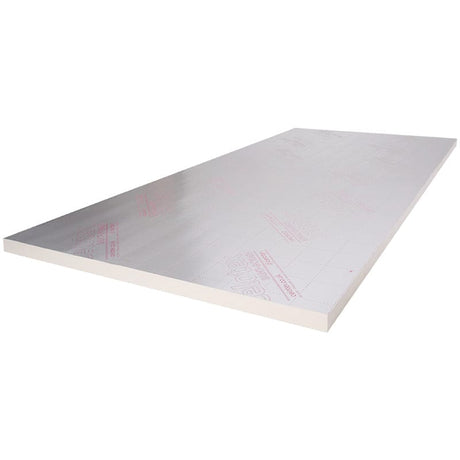
Celotex
75mm Celotex GA4075 PIR Insulation Board 2.4m x 1.2m - 2.88m2 per sheet
£35.39 Inc VAT £29.49 Ex VATUnit price /UnavailableIn stock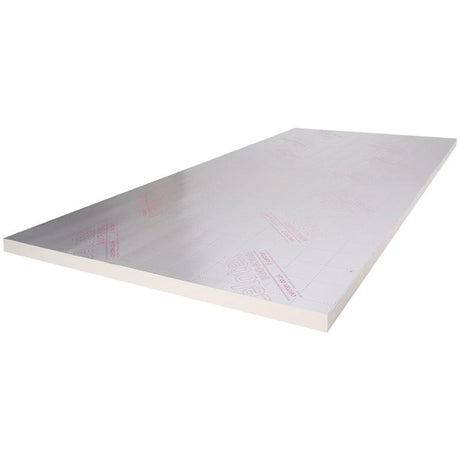
Celotex
80mm Celotex GA4080 PIR Insulation Board 2.4m x 1.2m - 2.88m2 per sheet
£40.91 Inc VAT £34.09 Ex VATUnit price /UnavailableIn stock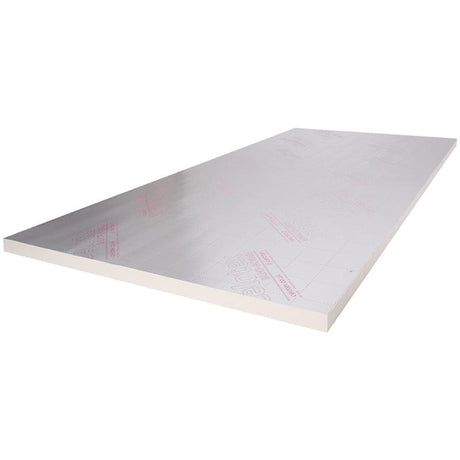
Celotex
90mm Celotex GA4090 PIR Insulation Board 2.4m x 1.2m - 2.88m2 per sheet
£44.83 Inc VAT £37.36 Ex VATUnit price /UnavailableIn stock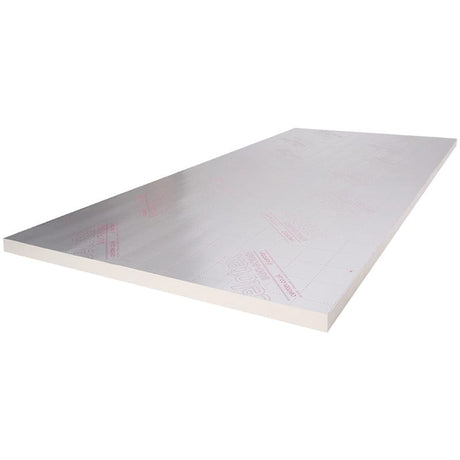
Celotex
100mm Celotex GA4100 PIR Insulation Board 2.4m x 1.2m - 2.88m2 per sheet
£45.29 Inc VAT £37.74 Ex VATUnit price /UnavailableIn stock


What Is Celotex GA4000?
Celotex GA4000 is a rigid polyisocyanurate (PIR) insulation board with a declared thermal conductivity of 0.022 W/mK and low-emissivity aluminium foil bonded to both faces. It sits in the middle of the Celotex 4000 family by thickness, covering seven boards from 50mm to 100mm, and it is the range specified for the bulk of standard pitched roof, dry lining and floor work.
Every board measures 2400mm x 1200mm and covers 2.88m². The edge profile is straight, so boards butt tight against each other and cut cleanly to fit between rafters, joists or studs. The closed-cell PIR core does not draw in moisture from the surrounding air, which keeps the declared thermal performance stable across the life of the construction.
Celotex Is Now Sopratherm by Soprema
On 1 January 2026, Soprema UK brought Celotex, Chesterfelt and YBS Insulation together under a single brand identity. GA4000 is now catalogued as Sopratherm GA4000, and celotex.co.uk redirects to soprema.co.uk.
The board itself has not changed. Same PIR core, same 0.022 W/mK declared lambda, same board dimensions, same product codes from GA4050 through to GA4100, and the same BBA certification. What has changed is the print on the packaging: stock arriving now may be labelled Sopratherm GA4000 rather than Celotex GA4000. If a drawing, schedule or specification calls for Celotex GA4000, Sopratherm GA4000 is that product.
Celotex GA4000 Specification
| Material | Rigid polyisocyanurate (PIR) |
|---|---|
| Board size | 2400mm x 1200mm, 2.88m² per board |
| Thicknesses | 50mm, 60mm, 70mm, 75mm, 80mm, 90mm and 100mm |
| Declared thermal conductivity (λD) | 0.022 W/mK |
| Facings | Low-emissivity aluminium foil both sides, surface emissivity 0.05 |
| Edge profile | Straight |
| Compressive strength | 140 kPa at 10% deformation to BS EN 826 |
| Reaction to fire | Euroclass F to BS EN 13501-1 |
| Certification | BBA Agrément Certificate 25/7318 (pitched roof, dry lining, floor) |
| Product standard | BS EN 13165 |
Celotex GA4000 R-Values by Thickness
| Product code | Thickness | Thermal resistance (RD) | Coverage per board |
|---|---|---|---|
| GA4050 | 50mm | 2.25 m²K/W | 2.88m² |
| GA4060 | 60mm | 2.70 m²K/W | 2.88m² |
| GA4070 | 70mm | 3.15 m²K/W | 2.88m² |
| GA4075 | 75mm | 3.40 m²K/W | 2.88m² |
| GA4080 | 80mm | 3.60 m²K/W | 2.88m² |
| GA4090 | 90mm | 4.05 m²K/W | 2.88m² |
| GA4100 | 100mm | 4.50 m²K/W | 2.88m² |
Every figure above is the declared thermal resistance calculated from the declared lambda of 0.022 W/mK and rounded down to the nearest 0.05, which is the method set out in BS EN 13165. One point is worth flagging: Soprema's own product table currently shows 5.50 m²K/W for the 100mm GA4100. That figure is not consistent with a declared lambda of 0.022 W/mK, which gives 4.545 and rounds to 4.50. Every other thickness in Soprema's table follows the correct method. We publish 4.50 because that is the figure the declared lambda supports, and it is the figure to use in a U-value calculation. If a specification has been written from the 5.50 figure, it is worth checking.
Thermal conductivity and thermal resistance are properties of the board and can be relied on as stated. A U-value cannot: it belongs to the completed construction, and depends on rafter or joist depth, the bridging fraction, what sits either side of the insulation and whether the build-up contains a sealed cavity. Soprema publishes a U-value calculator for working that out against a specific detail.
The same distinction applies to the foil facings. Low-emissivity aluminium foil improves thermal performance across a sealed, unventilated cavity air space next to the board. Where a build-up has no such cavity, that benefit does not apply and the declared thermal resistance in the table above is what the board contributes. Where the build-up does include a sealed cavity, turn the unprinted face towards it.
What Does GA Stand For?
GA stands for General Application. The Celotex 4000 family is split by thickness band, not by grade:
| Range | Thickness band | Compressive strength |
|---|---|---|
| TB4000 (Thermal Bridging) | 20mm to 40mm | 120 kPa |
| GA4000 (General Application) | 50mm to 100mm | 140 kPa |
| XR4000 (Extra Resistance) | 110mm to 200mm | 140 kPa |
All three share the same PIR core, the same foil facings and the same 0.022 W/mK declared lambda. GA4000 is not a higher-performing board than TB4000 in thermal terms: it is the same board in the depths that suit most standard build-ups, with a higher compressive strength that comes with the greater thickness. TB4000 exists for thermal bridging details and tight spaces such as reveals and perimeters. XR4000 exists to reach lower U-values in a single layer where a build-up would otherwise need doubling up, and the extra resistance in the name is thermal resistance, not compressive strength: GA4000 and XR4000 are both 140 kPa.
What Is Celotex GA4000 Used For?
BBA Certificate 25/7318 covers three application groups:
- Pitched roofs: between rafters, between and under rafters, between and over rafters, sarking, and at ceiling level as loft insulation.
- Dry lining: internal linings to masonry and framed walls, mechanically fixed or on a supporting frame.
- Floors: beam and block, solid concrete ground floors, upgrading an existing slab, and suspended timber floors.
Timber frame external walls in dwellings are covered separately under BBA Certificate 25/7329, which references NHBC Standards Chapter 6.2 and carries its own height restrictions.
Where GA4000 Is Not the Right Board
Not a cavity wall board. GA4000 is sometimes listed as suitable for cavity spaces. That confuses the sealed cavity air space behind the foil facing with a partial fill cavity wall application, and the two are not the same thing. For masonry cavity walls, the boards designed for the job are CW4000 and Thermaclass Cavity Wall 21.
Not certified for flat roofs. BBA Certificate 25/7318 covers pitched roof, dry lining and floor insulation only. Flat roof work needs a board certified for warm deck or inverted construction, and the choice depends on the waterproofing system going over it.
Not for external walls above 11 metres. Soprema states that, in accordance with current Building Regulations requirements relating to combustibility, the product should not be used in the external walls of relevant buildings over 11 metres in height. Where a project sits above that threshold, or where the specification calls for a non-combustible or limited-combustibility product, a mineral wool board is the route to take.
Celotex GA4000 Fire Rating
Celotex GA4000 achieves a reaction to fire classification of Euroclass F to BS EN 13501-1. Boards at this classification carry no smoke emission rating.
In practice this means the board is designed to be installed behind a lining or covering rather than left exposed. In a wall it is finished with plasterboard, not painted directly. That is standard for foil-faced PIR and is how every application in the BBA certificate is detailed.
Two older classifications still circulate on retailer listings and neither is current. Euroclass E appeared on Celotex datasheets up to January 2022 and has since been superseded. "Class 1 spread of flame to BS 476-7" appeared on legacy sheets and refers to a national classification system being phased out in favour of the European one. If a listing quotes either, it is out of date.
Reaction to fire is also not fire resistance. It describes how the board behaves under a standardised test, not how long a wall, floor or ceiling will hold back a fire. Fire resistance is a property of the completed construction and has to be established for the specification as a whole.
Does Celotex GA4000 Need a Vapour Control Layer?
Yes, where the design calls for one. The aluminium foil facing on GA4000 is a low-emissivity surface, not a vapour control layer and not a damp-proof membrane. Taping the board joints reduces air movement through the insulation layer but does not replace a designed VCL on the warm side of the construction.
The same applies to ventilation. In a cold roof or a between-rafter build-up, the design will usually call for a ventilated air gap above the insulation. Leave the gap the detail specifies rather than filling the full rafter depth. Condensation risk in roofs is governed by BS 5250 and by the certificate for the application, and both should be worked through before the boards are cut.
Certification and Documentation
- BBA Agrément Certificate 25/7318, covering pitched roof, dry lining and floor insulation for TB4000, GA4000 and XR4000
- BBA Agrément Certificate 25/7329, covering TB4000, GA4000 and XR4000 in timber-frame dwellings
- Environmental Product Declaration covering TB4000, GA4000, XR4000 and CW4000, issued through the International EPD System
- Product standard: BS EN 13165
Certificate numbers change on recertification, and several superseded references are still published elsewhere, including 17/5405 and 16/5352. Both have been replaced. The certificate holder name has also changed to Soprema Insulation Limited t/a Celotex, which matters if paperwork is going to building control. Refer to the current technical data sheet, Declaration of Performance and BBA certificate from Soprema before specification, purchase or installation.
What Thickness of Celotex GA4000 Do I Need?
In most cases the thickness is set by the specification or by the U-value target for the element, not chosen freely. Where there is a choice, three things usually decide it.
Available depth. In a between-rafter or between-joist application, the board has to sit within the structural depth while leaving any ventilation gap the design requires above it. Measure the actual depth on site rather than working from the drawing, particularly on older roofs.
How much resistance the layer has to deliver. Working from the R-value table, a 100mm GA4100 delivers exactly twice the thermal resistance of a 50mm GA4050. Where a single 100mm board cannot be accommodated, GA4000 is regularly combined with a second layer under the rafters, or with an insulated plasterboard laminate such as PL4000, to make up the difference.
Board count and handling. Each board covers 2.88m², so divide the area by 2.88 and allow for cutting waste, typically 5% to 10% depending on how many awkward junctions the job has. A 45m² pitched roof works out at 45 ÷ 2.88 = 15.6 boards, and adding 10% for cuts takes that to 17.2, so order 18. Order the full quantity in one go where possible: mixing batches partway through a run is more hassle than it is worth.
Cut boards with a fine-tooth saw or a sharp insulation knife, fit them tight to the surrounding structure, and tape the joints with a foil insulation tape to reduce air infiltration through the layer. If you would rather not cut on site, we run a bespoke cutting service and can supply boards cut to your sizes. Install in line with the current Soprema guidance and the project specification.
Why Choose Insulation UK
- Full range in stock. All seven GA4000 thicknesses from 50mm to 100mm, from a single board up to full-project quantities.
- Trade pricing. Rates on single boards and on larger quantities, for one-off jobs and full-project orders.
- Free UK delivery on orders over £500 ex VAT, direct to site or to the yard, on our FORS Gold accredited fleet.
- Bespoke cutting service. Boards cut to your sizes before they arrive, which cuts waste and site mess.
- Rated Excellent on Trustpilot. Our team knows the products and can talk through a build-up rather than just take an order.
- Advice on the phone. Call 0300 303 4578 to check availability, confirm a thickness against a specification, or price up a full project.
Celotex GA4000 FAQs
What is Celotex GA4000?
Celotex GA4000 is a rigid polyisocyanurate (PIR) insulation board with a declared thermal conductivity of 0.022 W/mK and low-emissivity aluminium foil facings on both sides. It is available in seven thicknesses from 50mm to 100mm at 2400mm x 1200mm, and is BBA certified under Certificate 25/7318 for pitched roof, dry lining and floor applications.
Is Celotex GA4000 the same as Sopratherm GA4000?
Yes. Soprema unified its UK brands on 1 January 2026 and GA4000 is now catalogued as Sopratherm GA4000. The board, its dimensions, its product codes and its certification are unchanged. Only the branding on the packaging is different.
What is the difference between Celotex TB4000 and GA4000?
The main difference is thickness band. TB4000 runs from 20mm to 40mm and is used for thermal bridging details and tight spaces; GA4000 runs from 50mm to 100mm and covers standard build-ups. Both share the same PIR core, the same facings and the same 0.022 W/mK declared lambda, so at any given thickness the thermal performance is identical. The specification difference is compressive strength: 120 kPa for TB4000 against 140 kPa for GA4000.
What is the U-value of Celotex GA4000?
The board does not have a U-value on its own. A U-value is a property of the whole construction and depends on the structural depth, the bridging fraction and everything else in the build-up. GA4000 has a declared thermal conductivity of 0.022 W/mK and a thermal resistance from 2.25 m²K/W at 50mm up to 4.50 m²K/W at 100mm, which are the figures used to calculate a U-value for a specific detail.
What is the fire rating of Celotex GA4000?
Celotex GA4000 achieves a reaction to fire classification of Euroclass F to BS EN 13501-1, with no smoke emission rating at that classification. It is designed to be installed behind a lining or covering rather than left exposed. Listings quoting Euroclass E or "Class 1 to BS 476-7" are out of date.
Can Celotex GA4000 be used on a flat roof?
Not under BBA Certificate 25/7318, which covers pitched roof, dry lining and floor insulation only. Flat roof work needs a board certified for the deck construction and compatible with the waterproofing system going over it. Call us with the detail and we will point you at the right board.
Is Celotex GA4000 the same as Kingspan?
They are different products with close specifications. Kingspan's Therma range, which includes Thermapitch TP10, Thermafloor TF70 and Thermawall TW55, is foil-faced PIR with the same 0.022 W/mK declared thermal conductivity as GA4000, so at a given thickness the thermal resistance matches. The difference is how the ranges are organised: Celotex splits by thickness band, Kingspan splits by application. Kooltherm is a different material again, phenolic rather than PIR, with a declared lambda of 0.019 W/mK, which reaches a given resistance in less depth at a higher price. Where a specification names one brand, check whether it permits an equivalent before substituting.
Where can I find the Celotex GA4000 data sheet?
The current technical data sheet, Declaration of Performance and BBA certificate are published by Soprema under the Sopratherm GA4000 product listing. Always work from the current issue rather than an archived Celotex-branded sheet.